

How Therapy Helps Children Manage Anxiety: A Complete Parent’s Guide
How Therapy Helps Children Manage Anxiety: A Complete Parent Guide
Watching your child struggle with worry, sleepless nights, or avoidance can feel overwhelming. You may wonder if it’s just a phase or if your child needs more support. You’re not alone, and therapy can help.
Childhood anxiety affects many families across Canada and globally. Research shows that 15–20% of children experience clinically significant anxiety by the age of 12. While some anxiety is a normal part of growing up, persistent worry, avoidance, or intense fear can interfere with school, friendships, and daily life. Early intervention is key.
This guide helps parents understand how therapy can support children, what to look for, and practical ways to foster emotional resilience at home.
What Is Child Anxiety and How It Shows Up
Children often express anxiety through behaviour rather than words. Signs may include:
Persistent worry or fear about school, friends, or family
Avoiding situations that cause stress
Trouble sleeping, frequent nightmares, or changes in appetite
Physical complaints like stomachaches or headaches
Irritability, tantrums, or emotional outbursts
Seeking constant reassurance or withdrawing in conversations
While occasional nervousness is normal, repeated or intense anxiety may signal that your child could benefit from professional support.
Key Takeaways
Childhood anxiety is common, but early support matters: Therapy can help children manage worry before it interferes with daily life.
Symptoms may be behavioral or physical: Anxiety often shows up through actions, sleep disturbances, irritability, or somatic complaints rather than direct verbal expression.
Evidence-based therapies work: CBT, play therapy, and other structured approaches help children develop coping skills and emotional awareness.
Parents are crucial partners: Open conversations, validation, modeling calm coping, and reinforcing strategies at home make therapy more effective.
Early intervention builds resilience: With support, children gain confidence, healthy coping mechanisms, and lifelong emotional skills.
How Therapy Supports Children with Anxiety
Child anxiety therapy provides a safe, structured environment where children can explore emotions and develop coping strategies. Therapy approaches often include:
Emotional Awareness
Helping children recognize and name feelings is the first step toward managing anxiety.Coping Skills
Techniques such as mindfulness, deep breathing, grounding, and relaxation help children manage anxious thoughts and calm their nervous system.Communication Skills
Therapy encourages children to express themselves safely, improving interactions with parents, teachers, and peers.Building Confidence and Resilience
Gradual exposure to anxiety-provoking situations in a supportive environment builds confidence and emotional flexibility.Parent Collaboration
Therapists work with parents to reinforce strategies at home, creating continuity and support across environments.
How Play Therapy and CBT Help
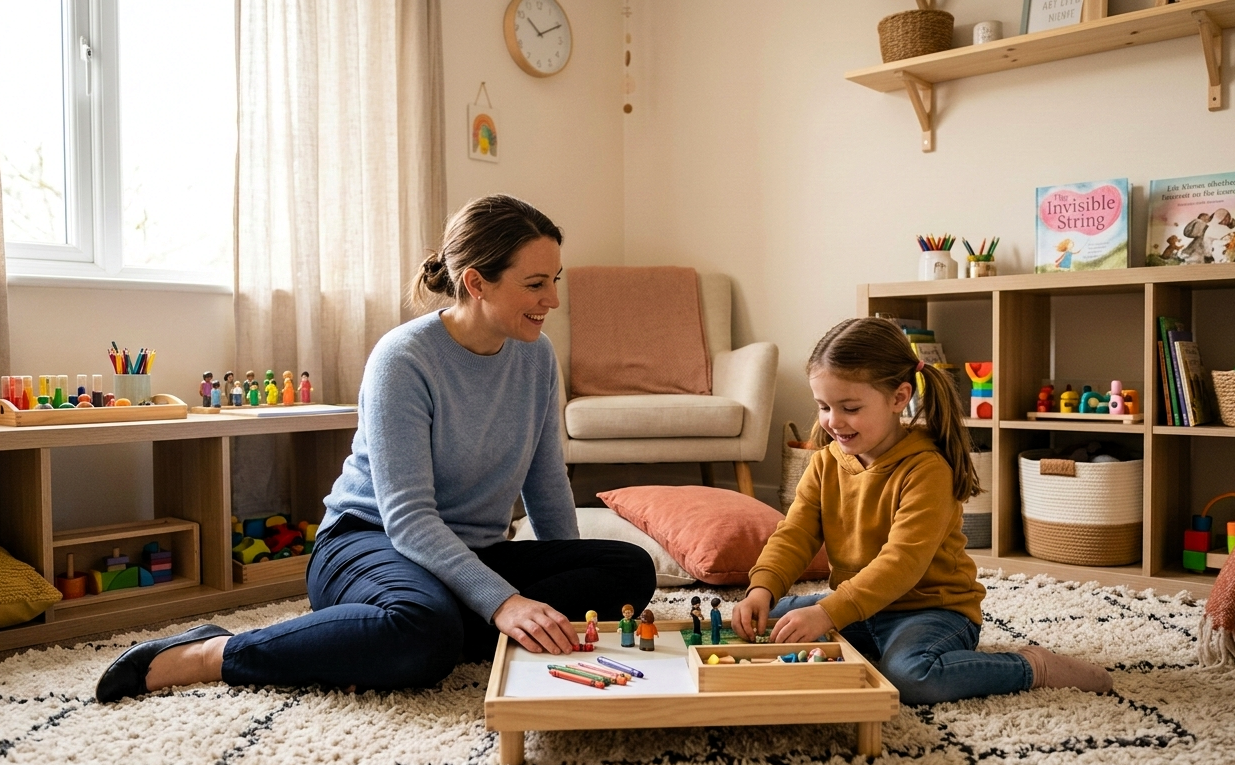
Young children may struggle to articulate emotions with words. Play therapy allows children to process feelings through creative activities like:
Sand tray therapy
Art therapy (drawing, painting, sculpting)
Role play or puppets
Games and storytelling
Cognitive-behavioral therapy (CBT) is also highly effective, helping children:
Identify anxious thoughts
Practice coping skills
Gradually face fears in controlled settings
Research shows that both approaches significantly reduce anxiety symptoms, enhance social skills, and improve confidence and emotional regulation.
Signs Your Child May Benefit from Therapy
Children may benefit from therapy if they:
Frequently avoid school, friends, or activities
Exhibit persistent worry or fear
Show emotional outbursts, irritability, or tantrums
Have trouble sleeping or experience physical symptoms (headaches, stomachaches)
Struggle to express feelings verbally
Early intervention can prevent anxiety from becoming entrenched and helps children build long-term coping skills.
Supporting Your Child at Home
Parents can reinforce therapy progress and create a supportive environment:
Create Open Conversation Spaces – Ask gentle questions like, “What felt hard today?”
Validate Emotions – Acknowledge feelings even if you don’t fully understand them.
Model Calm Coping – Show healthy stress management, such as deep breathing or problem-solving.
Encourage Healthy Routines – Consistent sleep, balanced nutrition, exercise, and social connection support emotional regulation.
Integrate Playful Activities – Art, music, cooperative games, or storytelling help children express feelings safely.
When Should You Consult a Therapist?
Seeking professional support doesn’t mean something is “wrong” with your child. Consider therapy if your child:
Experiences persistent anxiety or worry
Struggles with school, friendships, or daily routines
Shows intense emotional reactions beyond typical development
Has difficulty communicating feelings
Early support prevents anxiety escalation and equips children with lifelong emotional skills.
Frequently Asked Questions
1. Can my child attend therapy alone?
Yes. Children often attend independently, giving them a private space to explore emotions. Parents may participate occasionally to reinforce progress.
2. What types of therapy help childhood anxiety?
Cognitive-behavioral therapy (CBT) and play therapy are commonly used. Techniques may include role-play, art, storytelling, games, and structured coping exercises.
3. How long does therapy usually last?
Duration varies. Some children benefit from short-term sessions (8–12 weeks), while others need ongoing support.
4. How can I reinforce therapy at home?
Encourage open communication, validate emotions, model coping skills, and collaborate with the therapist for continuity.
5. Can therapy help with school-related anxiety?
Absolutely. Therapy teaches children to manage academic pressure, perfectionism, and social anxiety, improving confidence and performance.
About the Author
Vipjit Sidhu, MA, MSc, is a Registered Psychotherapist and founder of Mount Pleasant Counselling & Psychotherapy. She supports children, adolescents, mothers, and families experiencing anxiety, emotional overwhelm, and life transitions. Vipjit helps individuals and families build emotional awareness, resilience, and healthy coping strategies, while fostering stronger relationships and well-being. She offers therapy in English, Punjabi, and Hindi, providing culturally sensitive and supportive care.
References
American Academy of Child & Adolescent Psychiatry. Teen and Child Anxiety. 2022.
Canadian Paediatric Society. Understanding Anxiety in Children. 2023.
National Institute of Mental Health. Child Anxiety Disorders. 2023.
World Health Organization. Adolescent and Child Mental Health. 2021.
Association for Play Therapy. Play Therapy Evidence-Based Practices. 2023.
Cortina, S., & Li, X. Early intervention for childhood anxiety: Evidence-based practices. Journal of Child Psychology and Psychiatry, 2022.
James AC, James G, Cowdrey FA, Soler A, Choke A. Cognitive behavioural therapy for anxiety disorders in children and adolescents. Cochrane Database of Systematic Reviews.
